Such an Air (V)
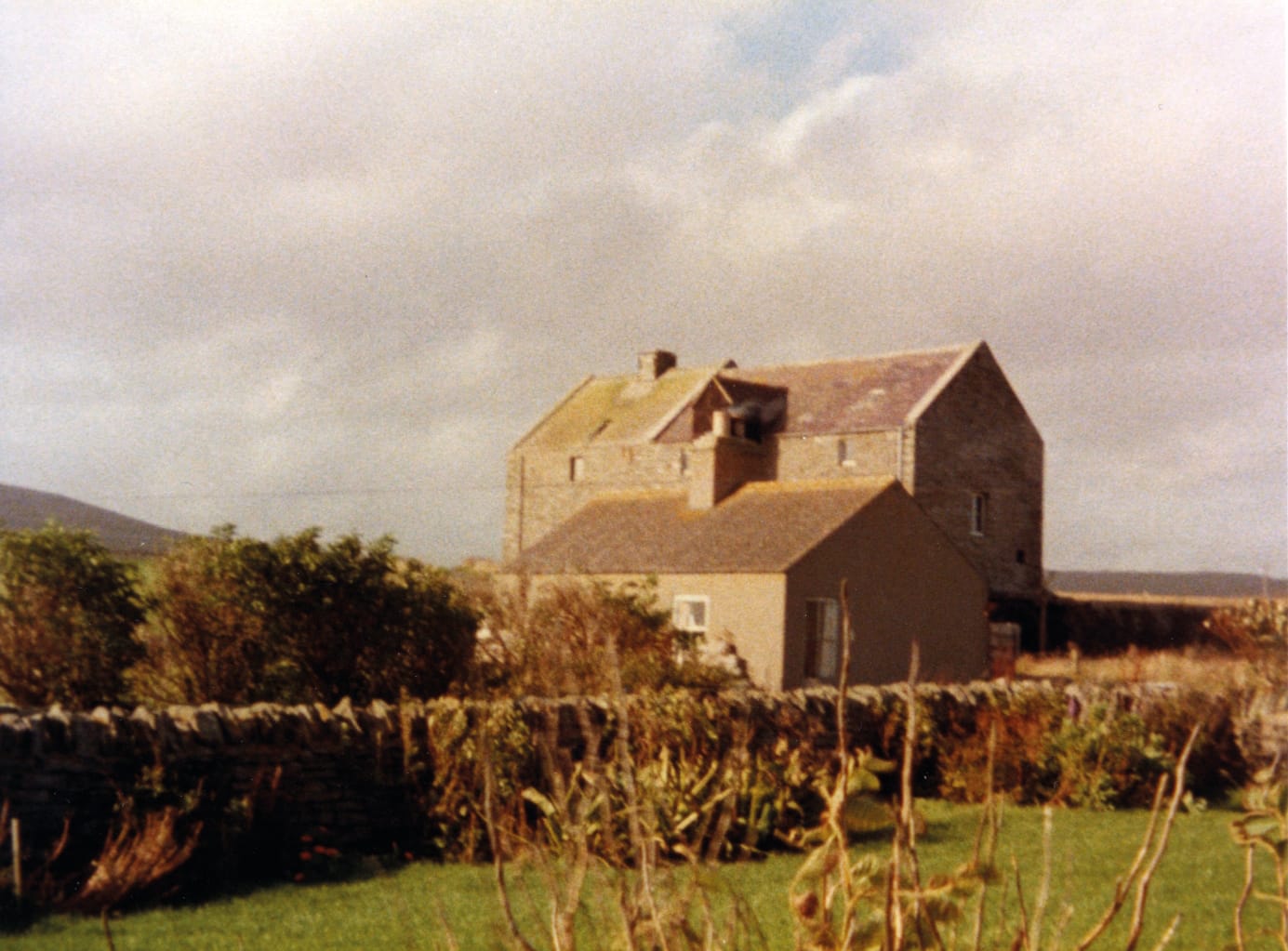
GEORGE SUFFERED too from this shivering thing, and hadn’t believed Ian would make it back here. He’d long been physically sick as well, with TB, but had got away at last, via Newbattle, and Muir, and now the university. Whatever he did later, the Hogarth book was sure to be noticed. But what would come of it? Teaching, like his sister? Girlie said she'd worked at one of the island schools.
Ian could hardly imagine it, or see him living for long outside Orkney. He'd said nothing last month about wee Stella—they all knew one another through her aunt up in Perthshire—but that would never lead anywhere. God, Tom Scott. He remembered him striding below in St Andrews like a fiery apostle of Lallans. Really, George was more likely to enter a monastery.
Jock had found him an old army wireless, would charge up the battery, but he was waiting for Stanley next door to help sort out the aerial. He'd have to find a suitable pole, though you saw them everywhere, all sizes, and the wee electric windmills. Among the 78s Jock had brought along that morning, on the way up to Blossom, was Bridie Gallagher, At the Close of an Irish Day. Ian had enjoyed hearing that at Daisy Cottage, a great find. Ideal for here too, to soothe his nerves after a day at the quarry or out on repairs, rain or shine, melting tar and mending potholes.
How long he was going to survive at that he didn't know, but at least he was eating and feeling healthier, beyond all the aches and weariness. Fresh air too, and fine views out on the road. And the squad had its comedians, more agreeable than the grim determinist Perthshire peasants—and most of the writers and artists he knew. Which wasn't saying much.
He'd have to pay MacLeod the doctor a visit: he might have some suggestions.
But these surroundings were something else to be worked on, to make a new myth. Arcadian, as the local accent rhymed it, both idyllic and spartan—the tackety seaboot. The water lapping with low sounds by the shore. Low sounds at the door at Nethermill.
Aye, hid's a fill muin the night, beuy, better keep thee buits haendy.
George too had done a turn on the Rousay roads before he got his column with The Orkney Herald. Jock was amused to remember it: Never clapped eyes on a raek afore. Kent na' waan end o a barrow frae the t'ither. But great for the mimicry. MacMillan, Lord Haw-haw, Churchill. Kept us cheerful.
What would they be saying about his own efforts. The horny-handed, hornily-seabooted sons and daughters. In my mediating of my self-othering with myself, into poetry. As Mansie might say. (Where did I read that? Kirkwall library? I'll get them to send it out.)
George had been back across here again, years ago now, to write up a visit by the Stromness golfers. Quite a spot, though a leg-breaker of a course. Great for a picnic in the sunshine, with a view across to Costa Head and the wrecked wind turbine. Hid'll nivvar deu, beuy. Ower windy allthegither. Better aff wi' th' ile.
He'd a right good appetite, said Girlie, though thur wis naethin tae 'im herdly. Enjoyed me cheese sandwiches. "Like closing your teeth on a dream," he wrote. Jist lovely.
Islandman.
ººº
He’d get someone to send up his typewriter. Edward would see to it. Meanwhile he’d books to read, letters to write and a title—a city title, but so were most of the poems so far—a Glaswegian Beatitude. Ah quite. Dead beat. For how with his weary wrist and aching shoulders, weeping gouts of tar onto the rattling sneck, suffering the countryside’s mirth, might he hold a pen steady and feel for a rhythm?
And how to bring his own Rousay into it, when he’d not half so many gifts as George, for all his luxuriance, piety and cheek—his “buttered bannock” pierhead wantonness, another kind of dream. And his "Damn me, it’s the minister..." He liked that, Kailyard or no. There'd be a plaque for him too one day, and the others, all that social, civic connection. Not for the likes of me. And wee Robert who'd offered to take him out on the loch anytime. Praised by Girlie, beguiled as she was by the lyrical nests, dreams of cheese, and Christina's “Peerie Grandson”.
And that lad from Harray, The Bard o' Ballarat, who’d been here the other week for a concert. Whit a laugh, he had us all picked out, whit reed faces! It was all they could talk about.
"And the men o' Brough they tell me are the worthiest o' pairs,
Thir caught so many lapsters that thir multi-millionaires,
They both believe the Harray folk's a lot o' cheeky swabs,
So Ah'm very, very glad thirs no demand for Harray Crabs." [1]
Whit a wark, honestly Ian, mercy me! Jist very near rollan in the aisles. Oh an' Steebly teu an' Peggy:
"And Ah'm sure yi'll aal agree this is the proper time tae speak,
O Peggy Corsie's prize she won at Stromness Shopping Week,
At Stromness Shopping Week, thirs alwis prizes big and small,
Bit tae win the owner o' the shop's the finest prize o' all."
Notes
The above comprises the fifth section of a narrative in six parts, plus coda, which loosely concerns the early stages of the seminal second visit made to Orkney by the poet Ian H. Finlay (as he then was) in spring 1959. The title is taken from Finlay’s poem, from The Dancers Inherit the Party (1960), “Mansie Considers Peedie Mary”. It mainly provides background for a publication entitled Rousay Mending: A Footnote, the subject of which, naturally enough, is Rousay Mending, originally a centenary homage to IHF, also published in Orkney by Brae Editions, 2026 and illustrated below. See [link to follow].
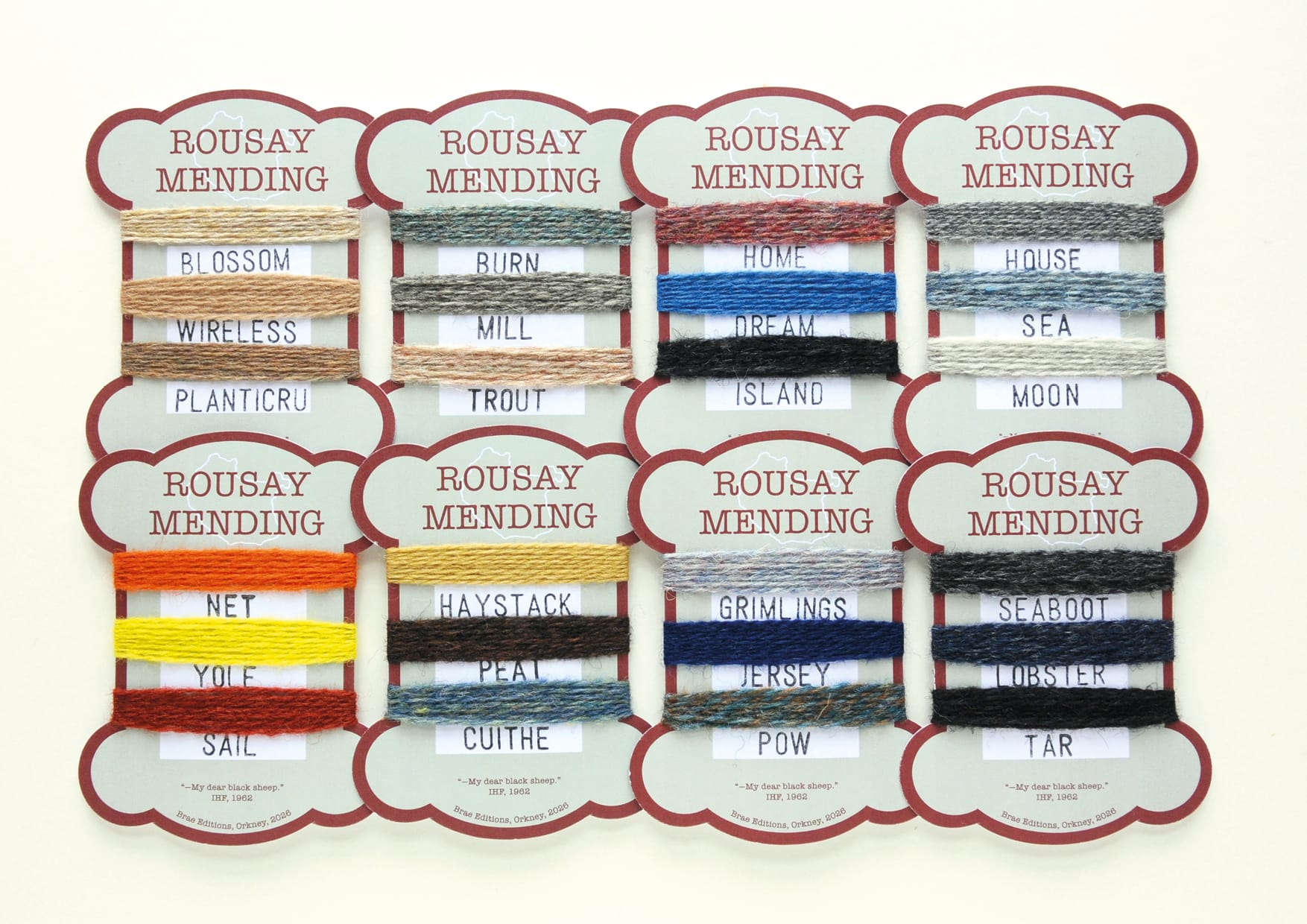
Such an Air is thus a speculative account of selected events, persons, and places that Finlay may have encountered in the early stages of that 1959 visit, the information having been derived from or been prompted by documentary sources, interviews and visits. The account borrows here and there from Finlay's work in ways which will largely be obvious, we hope, to his readers and admirers. But for the avoidance of doubt, we emphasise that a good deal of licence has been taken with what might have occurred during the period in question. Unlike Rousay Mending: A Footnote, Such an Air is not meant to be understood as factually accurate. It would hardly be true to say that no resemblance is intended to any person, alive or dead, but where it may be relevant to say so, no disrespect is intended to their memory. Further, no certainty is to be understood as having been assumed in representing how they thought about others, or how others may have thought about them.
The text above and those that follow will be revised from time to time and may be withdrawn without notice. There are no endnotes or bibliography, but reference may be made to those supplied for the Footnote, here.
Alistair Peebles, Brae Editions, Orkney, 2026